
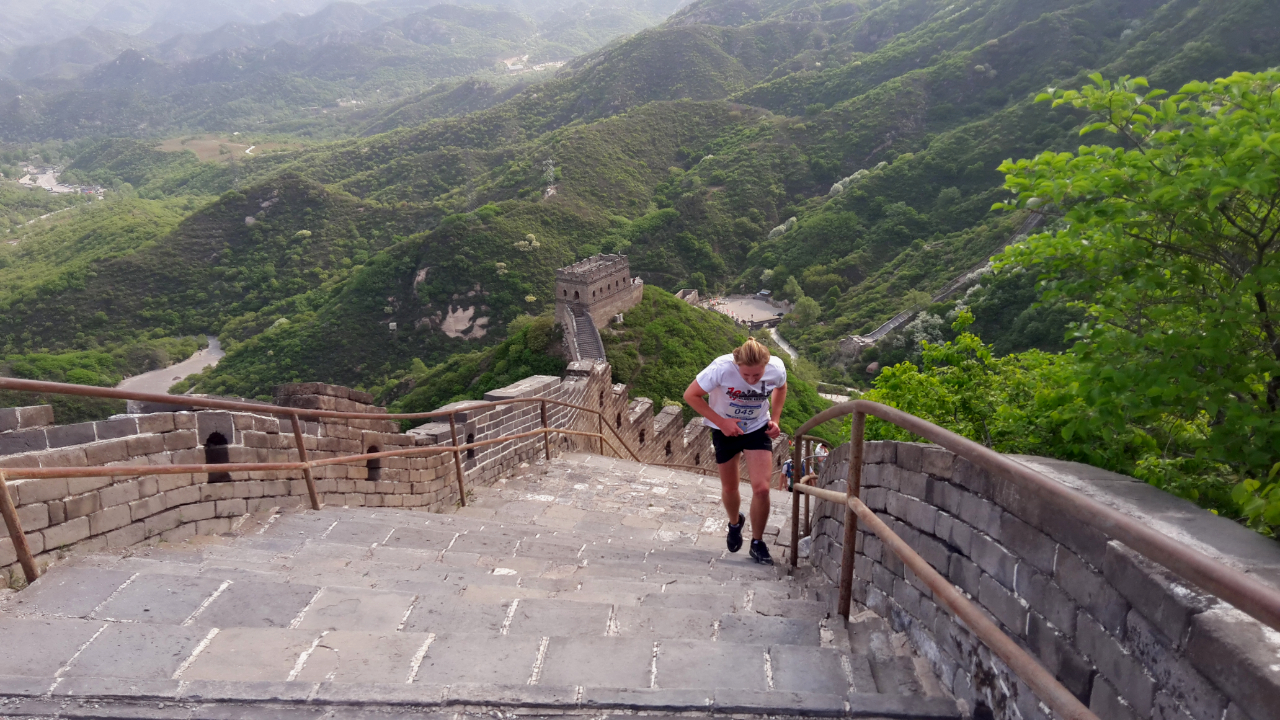
Training for the Great Wall of China Marathon (GWCM) differs greatly from your ordinary marathon training program. Ordinarily, marathon training focuses on building an aerobic (endurance) fitness which you acquire from training on flat or hilly roads, followed by speed endurance and muscle strength training. Training for the GWCM involves a lot more stair climbing runs and running on mountainous terrain. This is called race specific training and it is essential for marathons of this kind, especially if you want to finish the race and even more so if you want to finish the race with a good time.
As I mentioned in my previous blog, there are two Great Wall of China races to choose from. The first one, called The Great Wall Marathon, is partly run on the wall and then takes you on a trail route through the lower valley and small villages. This means that you will be running up and down thousands of steps on the wall, as well as on long stretches of flat and hilly dirt roads. Your training program should thus incorporate both flat and hilly trail runs, as well as steep hills and stair training.
The second race, called The Great Wall of China Marathon, is run exclusively on the wall. This means that you will be running up and down thousands of steps with short rolling inclines and declines. The biggest part of your training program should focus on steep hill and stair training.

Intensity
During this training program, I will use training zones as an indication of training intensity. Training zones are measured as a percentage of your maximum heart rate (HRmax). These are the five generally accepted training zones:
Zone 1: 55 – 65 % HRM
Zone 2: 66 – 75 % HRM
Zone 3: 76 – 90 % HRM
Zone 4: 91 – 95 % HRM
Zone 5: 96 – 100 % HRM
During this training program, the intensity (training zones) will start off low and will increase as you progress through the program.
Training Volume
Your training volume is measured as time trained per week. At the start of the program you will train 3-4 days per week and this will increase to 5-6 days per week. Once you hit the peak of your training program the training volume will decrease as you get closer to race day so that you will be at your optimum performance level at the time of the race.
Stair climbing
Including stair climbing into your program is essential because it is very specific to what you will encounter during the race. Do some research into where the best place will be for you to train stair climbing. Consider using the flights of stairs in your apartment building or trail routes that have steep hills.
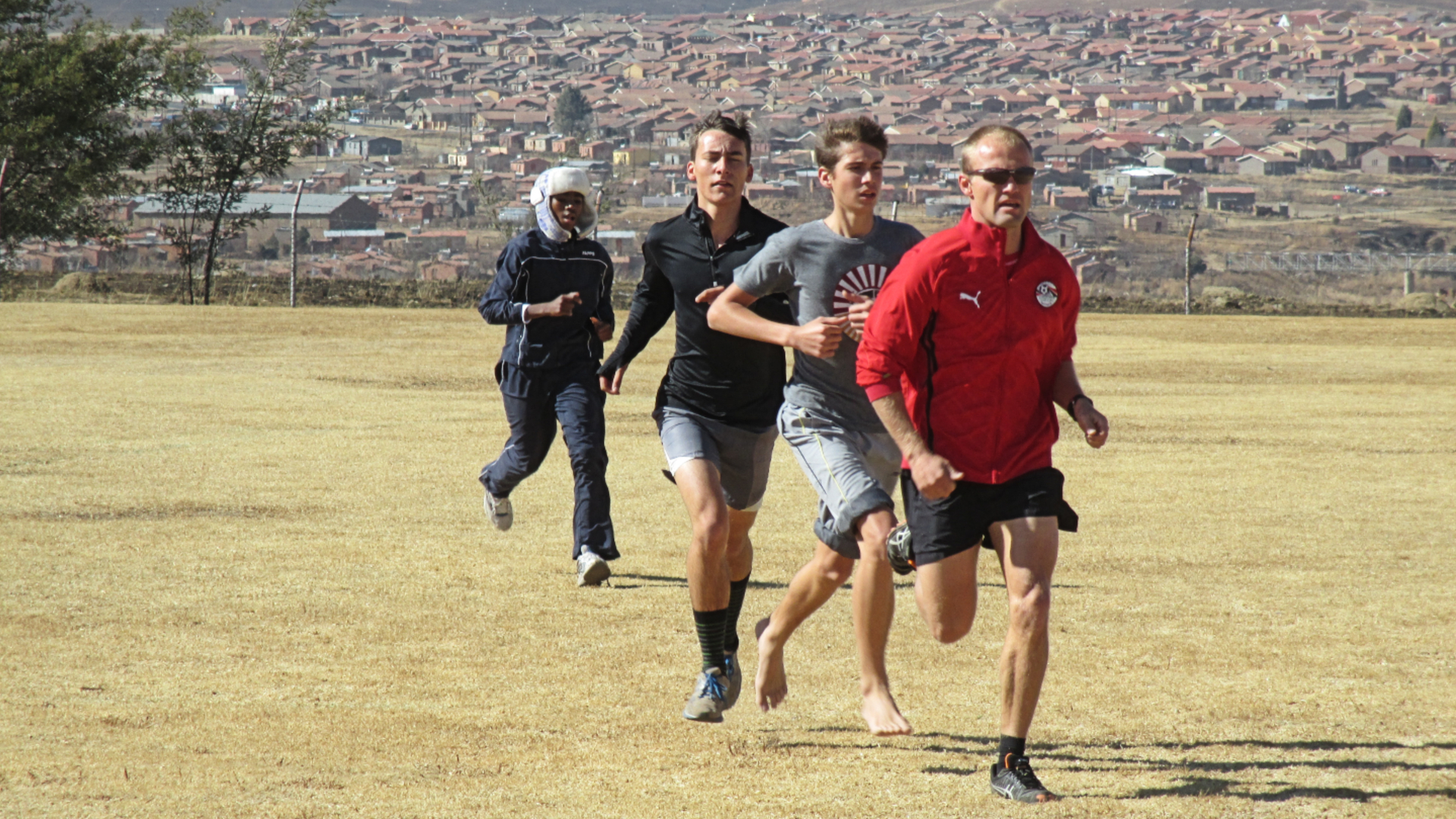
Mountain trail running
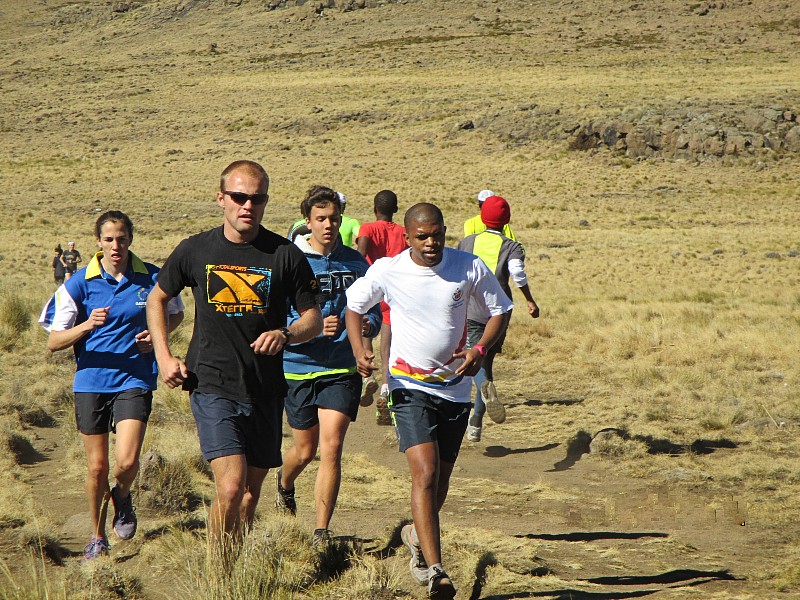
Running on mountainous terrain with steep, uneven and rocky surfaces will help simulate the stress that your legs will experience when running up and down thousands of steps during the GWCM. Chose mountain paths with natural steps so that you are forced to step or climb up and down these rocky paths.
The training program
The training programs for these two marathons differ slightly. If you are doing the Great Wall of China Marathon then you must include a lot more stair climbing and mountain runs and into your program. If you are an inexperienced runner you should start your training program 6 months before the race. If you are an experienced runner, you can start your training 4-5 months before the event.
Month 1:
Your main focus during this month should be to build an aerobic fitness base. This is done by doing long slow distance (LSD) runs in training Zone 2. Your training volume should be between 195 and 210 min per week and you should train 3 to 4 days per week.
Day 1: LSD training
Zone 2
45-minutes
Day 2: 1 km loop with long hills
LSD pace
Zone 2
Select a long hill (200m – 400m) with a gentle gradient of 5 % and do 6, 1km loops.
Day 3: Rest
Day 4: LSD training
Run in Zone 2 for 20-minutes.
20-minutes stair climbing workout.
Day 5: Rest
Day 6: LSD training
Zone 2
60-minutes
Day 7: Rest
Month 2:
The main focus of this month is to improve your aerobic fitness and start incorporating pace/tempo runs into your program. Your training volume should be between 255 and 280 min per week and you should train between 4 and 5 days per week. You should also make sure that your LSD runs are race-specific by running on mountainous terrain. Remember to incorporate stair climbing sessions.
A very important aspect to consider during this month is to include an active rest week. During an active rest week, you should decrease your training volume, but keep the intensity the same. You can also include cross training that should include rowing, cycling or swimming.
Day 1: Rest
Day 2: LSD training
Upper levels of Zone 2.
50-minutes
.
Day 3: 1km loop with long hills in mountainous terrain
LSD pace
Zone 2
Select a long hill (200 m – 400 m) with a gentle gradient of about 5 % and do 6, 1km loops
45-minutes
Day 4: Pace/tempo training
Run for 10-minutes at the lower end of Zone 3 and then do a 3-minute recovery run in Zone 1.
You should repeat this for 30-minutes.
20 -minutes of stair climbing workout.
Day 5: Rest
Day 6: LSD training
Upper levels of Zone 2.
50-minutes
Day 7: LSD training
Lower levels of Zone 2.
60-minutes
Month 3:
Now that you’ve built a strong and stable aerobic fitness base, you should start improving your anaerobic (speed and strength) fitness. You will continue to incorporate race-specific training. You should also do your first 21km trail run during this month.
The breakdown of your training program should be as follows:
Aerobic training: 75 % (LSD runs and long hills)
Anaerobic training: 25 % (long intervals and medium hill sprints)
You can improve your anaerobic fitness by increasing the amount of pace/tempo runs you do weekly. You can also start incorporating long interval training runs. During this month your training volume will increase and you should complete between 310 and 340 minutes per week and run 5 times a week. Your training intensity should also increase and your anaerobic runs should fall in Zone 3 and 4.
Day 1: Rest
Day 2: Long intervals on mountainous terrain
Run 1km at the lower end of Zone 4, followed by a 1km run at the lower end of
Zone 2.
Repeat this 4 times.
50-minutes
Day 3: 1km loop with long hills
LSD pace.
Zone 2
Select a long hill (200 m – 400 m) with a gentle gradient of about 5 % and do 8, 1km loops.
50-minutes
Day 4: Pace/tempo training
Run for 10-minutes at the lower end of Zone 3 and then do a 3-minute recovery run in Zone 1.
Repeat this workout twice.
30-minutes stair climbing workout.
Day 5: Rest
Day 6: LSD training
Upper levels of Zone 2 for 30-minutes.
30-minutes stair climbing workout.
Day 7: LSD training
Lower levels of Zone 2
15 – 21km
Month 4 and 5:
During months 4 and 5, your training intensity and volume should reach its highest levels. I recommend starting this month with an active rest week by doing cross training. You should also enter your first and second marathons during these two months.
Marathon running is an endurance sport, aerobic fitness should always take up the biggest percentage of your training time, but it is equally important to improve your speed and power so that your musculoskeletal and pulmonary-vascular systems are able to cope with the stress they will experience during a long endurance race.
The training intensity during these 2 months will vary between Zone 2 to 5, depending on the type of activities you do. Your training volume should be high and you should run between 5 and 6 times a week, completing between 295 and 595 minutes per week.
Day 1: Rest
Day 2: Long fast distance (LFD) run on mountainous terrain.
The upper end of Zone 3.
60-minutes
Day 3: LSD training
Zone 2
40-minutes
Stair climbing workout.
40-minutes
Day 4: Short hills on mountainous terrain.
10-minute warm-up jog in Zone 2.
12 – 15, 60-meter hill sprints. You will sprint up the hill in Zone 5 and jog down in Zone 2.
10 warm-down run in Zone 2.
       OR

       Short intervals on mountainous terrain.
       10-minute warm-up jog in Zone 2.
       2-minute fast run at the upper end of Zone 4. Followed by a 20-minute slow run in Zone 1.
       Do a 10 warm-down job in Zone 2.
       The total time for the session should be 60-minutes.
Day 5: Rest
Day 6: Long intervals
1 km at the lower end of Zone 3 followed by a 1km at the lower end of Zone 2. Repeat this four times.
40-minutes stair climbing workout.
        OR

        Pace/tempo training.
        Run for 15-minutes at the lower end of Zone 3 and then do a 3-minute recovery run in Zone 1.
        Repeat this for 40-minutes.
        40-minutes stair climbing workout
Day 7: LSD training
Lower levels of Zone 2
21 – 55km
Month 6:
During this month you should complete your longest run and then start tapering off your training efforts. Complete a long run, of 50km or more, during the first week of the month and run it at a race pace. I would advise you to run this part of the training program with your running club or friends. This run will also provide you with the ideal opportunity to receive feedback, which will help you determine how your body will react during the race. This feedback can help you plan accordingly as you make final race preparations.
Your training volume should decrease from week 2, but your training intensity should stay the same up until the week before your race. During that last week, both your training volume and intensity should decrease so that you can peak on race day at the Great Wall of China Marathons.
The type of running activities you complete during this month should be similar to those you did during months 4 and 5. The focus of your training during this month should be as race specific as possible. The more you mimic the race conditions, the better your body will cope with those conditions on race day.


The race
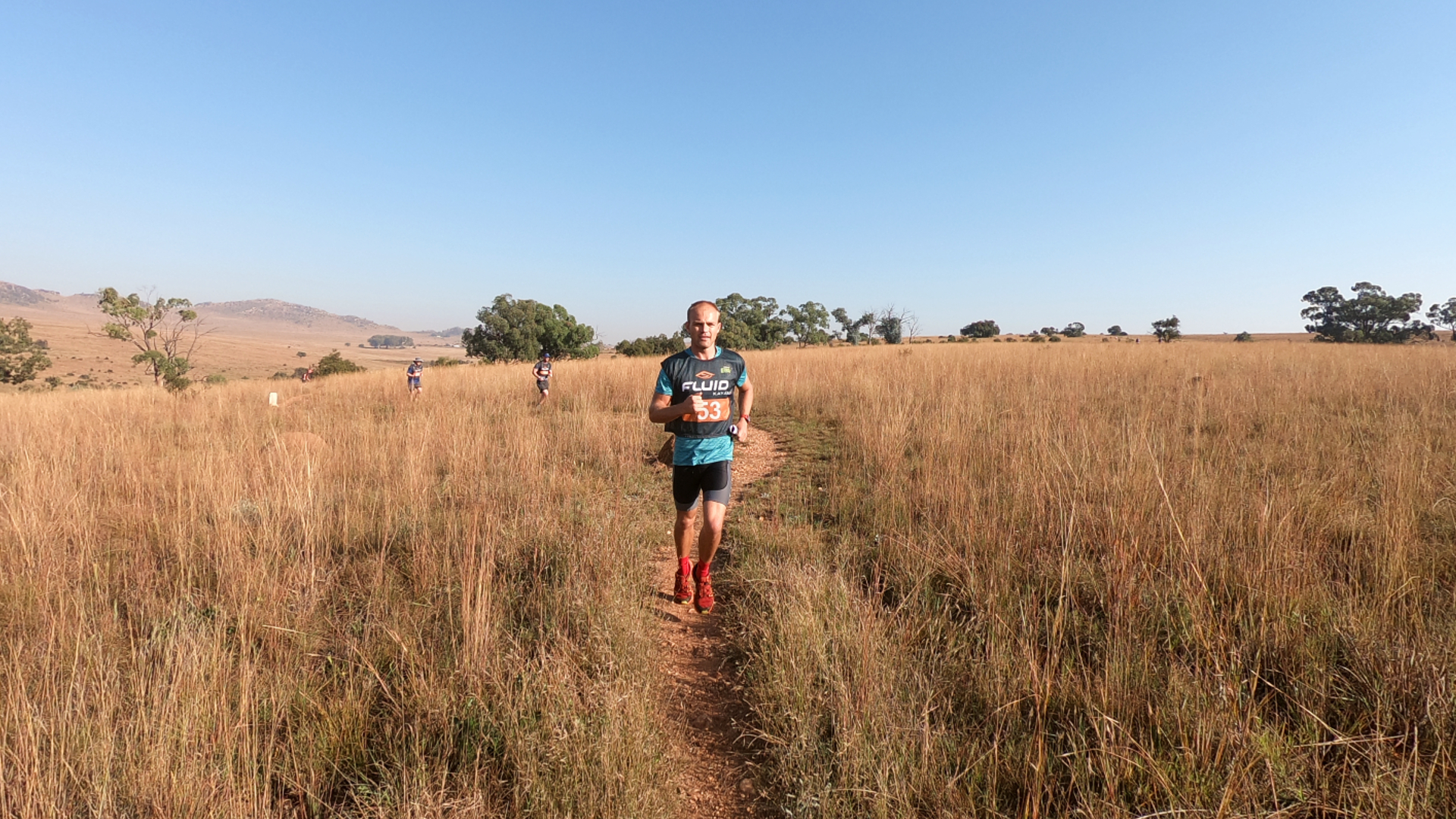
Once you are standing on the starting line, your nerves will be at an all-time high, you will question yourself and wonder if you are ready to finish this race. My advice is to trust your training. If you put in the training hours, and you completed the race-specific training you will finish the race and it will be with a good time.
Now go out there, and start training. The next Great Wall of China Marathon is less than a year away.
 The Extreme Sports Traveller